Hass Avocado (Persea americana Mill.) residues as a new potential source of neuroprotective compounds using pressurized liquid extraction
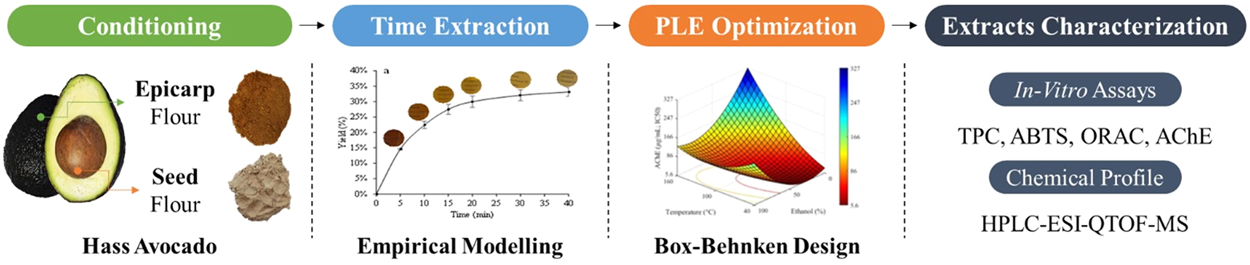
What if the avocado peels you toss in the trash could help protect your brain? A new green extraction method unlocks neuroprotective compounds from Hass avocado epicarp, turning waste into a promising ally against Alzheimer's disease.
Hass avocado processing leaves behind mountains of epicarp and seed, residues often discarded. But these by-products are far from useless. They are packed with bioactive compounds, and researchers have found a way to unlock their neuroprotective potential using pressurized liquid extraction (PLE).
The team optimized the extraction process using a Box-Behnken design, testing combinations of temperature, pressure, and solvent. The winning formula: pure water (0% ethanol) at 40°C and 100 bar, applied to 100% epicarp. This green approach yielded impressively high extraction efficiency (26.8 ± 0.9%) and a total phenol content of 505 ± 25 mg gallic acid equivalent per gram of dry extract.
The resulting extracts demonstrated strong antioxidant capacity in both ABTS and ORAC assays, and moderate acetylcholinesterase inhibition (33.6 ± 2.9 µg/mL), an enzyme linked to Alzheimer's disease progression. Chemical analysis via UHPLC-ESI-QTOF-MS tentatively identified phenolic acids, phenolic alcohol derivatives, and flavonoids, particularly flavonols.
This study shows that avocado epicarp, a low-value residue, can become a sustainable source of potential neuroprotective agents. The PLE method is efficient and environmentally friendly, offering a new strategy for valorizing avocado processing waste.
Key Points
- Green PLE method extracts neuroprotective phenolics from avocado epicarp.
- Optimal conditions: pure water, 40°C, 100 bar, high yield.
- Extracts show antioxidant and acetylcholinesterase inhibitory activity.
Comments
No comments yet — be the first.